🙏🏽 Acknowledgments to:
Chantal Gérard-Landry, who wrote “HOPI, People of Peace and Harmony,” published by Albin Michel in the “Indian Earth” series. This book gave me a better understanding of Hopi mythology.
Book II - The GYNE
An initiatory journey between reality and legend
Chantal Gérard-Landry, who wrote “HOPI, People of Peace and Harmony,” published by Albin Michel in the “Indian Earth” series. This book gave me a better understanding of Hopi mythology.
The novels of Jean Ray, a pioneer of fantasy literature and member of the Belgian School of the Strange. His first collection was “Les contes du whisky” (Whiskey Tales). Later, he wrote the famous Malpertuis, which was made into a film starring Orson Welles.
The works of Isaac Asimov, an engineer who invented the rules of robotics that are still in use today. He wrote more than 500 books and a monumental work: Foundation, in five volumes.
The novels of René Barjavel, including Le Voyageur Imprudent (The Reckless Traveler), underpinned by philosophical thoughts on time, the future of humanity, impossible love, reckless science...
Les univers d’Alfred Elton Van Vogt : qui se souvient de « Black Destroyer » qui rencontra un succès immédiat et dont on dit que ce serait l’une des sources du film « Alien » ?
Jean Giraud under the pseudonym Mœbius, is considered an influential author with multiple styles who revolutionized the image we had of science fiction, fantasy, and westerns in comic books! His transition from “Pilote” to “Métal Hurlant” marked a turning point in the history of comics, allowing for the emergence of more adult and experimental stories.
Jean-Michel Folon, painter, engraver, screen printer, and sculptor. Famous for his flying characters and dreamlike paintings.
Peter Gric, whose works are steeped in fantastic realism, futuristic landscapes, and biomechanical surrealism.
François Schuiten, sometimes in collaboration with his brother Luc, author of magnificent comic books, including the timeless series “Les Cités obscures” (The Obscure Cities).
“The Golden Hair” is a triptych composed of science fiction novels recounting the adventures of Jod, an Irish cowboy who has become immortal against his will. He embarks on an enigmatic quest. He is not alone, and several characters wander alongside him, often independently of one another. First traversing a mysterious desert, seemingly stuck between the “Sonora” and the “Painted Desert,” they then arrive in even stranger worlds... In all these lands “parallel” to our globe, the laws of classical physics no longer apply in the same way...
The first territory explored by the characters, where the laws of physics begin to lose their meaning.
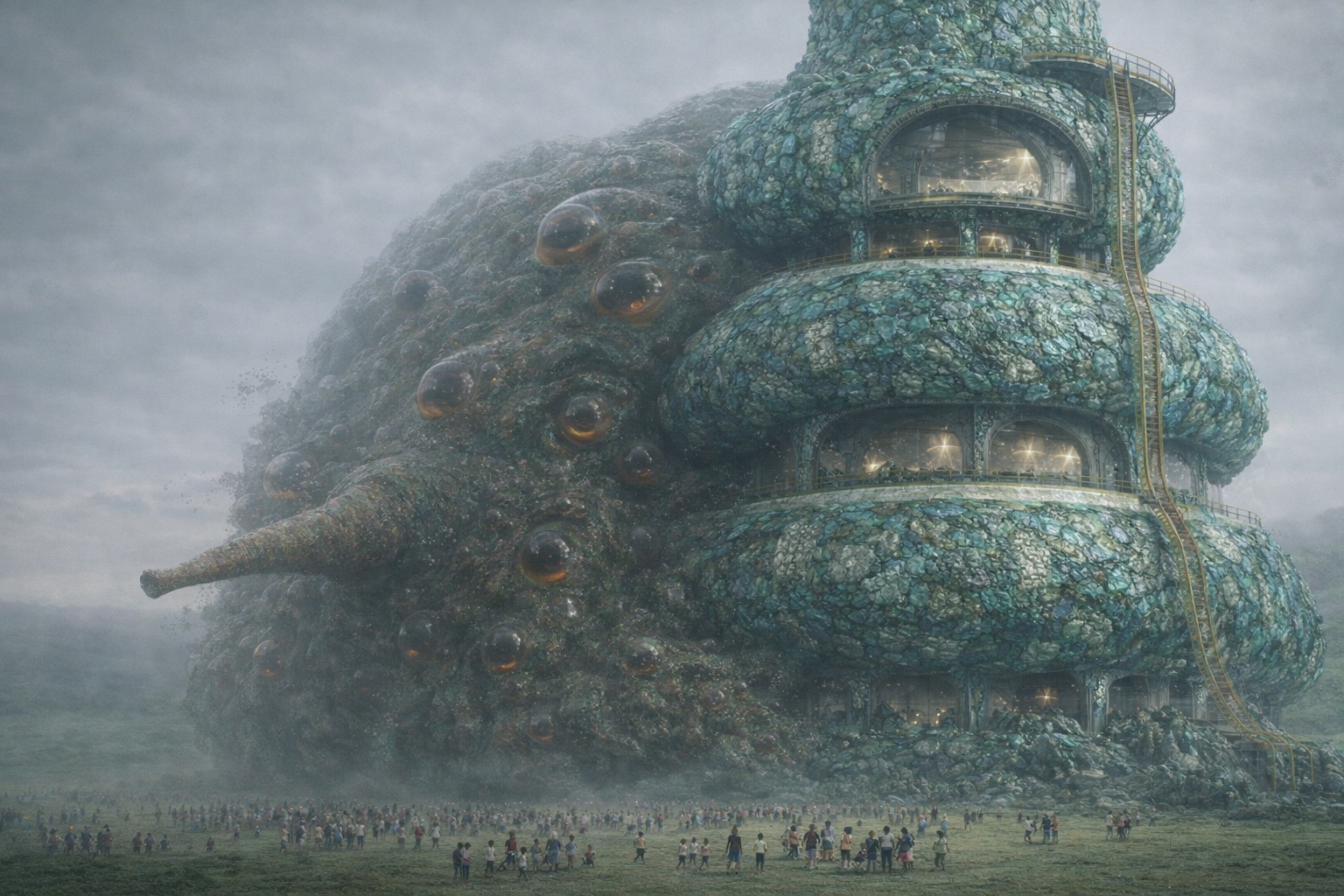
Living asteroids? Titans from the Muspelheim of the Norse gods? Their presence is surprising in the fifth Hopi world. Where they harbor life...
Teaches the protagonists to think about the weight of eternity, if not the meaning of existence.
“Warrior guardians,” ancestral spirits who help mortals in danger or indecisive immortals
Imprecise, indecisive, often fading depending on the context of the situation
The action takes place in the 1870s, a pivotal decade in American history, marked by profound upheavals.
Jod was a schoolteacher in Ireland, then went into exile in North America where he became a cowboy. In the first novel, he travels on horseback. He serves as a catalyst for the characters he encounters in often distorted situations in lands far removed from our conventional space-time.
Wong Feng, the discreet laundress, was one of thousands of Chinese workers who arrived to build the railroad, work in factories, etc. Victims of the Chinese Exclusion Act (1882), they embody the dark side of the “American dream.”
The 1870s saw an intensification of conflicts between American expansion and indigenous nations. The peaceful and spiritual Hopi people maintained their ancient traditions despite growing pressures.
The American West at that time was a land of endless possibilities: gold prospectors, outlaws, adventurers... Jod lived in this world where the law was often that of the strongest or the most cunning.
At the beginning, in the first novel, individuals struggle in a reality that is not always glamorous, laborious, ancillary, often at ground level. It will undergo slippages caused by strange spirals attached to a merciless desert. Difficult to find, they will allow for movements that would be impossible in a conventional universe. From the second novel onwards, when the heroes arrive in another world, this time quite separate from our own, it becomes difficult for them to define the real from the unreal. In the third novel, the heroes will have to adapt to environments that no longer allow them to react according to earthly criteria. Among other things, to what phenomenon can we link this legend of “The Golden Hair”?
The characters ask themselves questions about the perception of time in the context of immortality. How does one live when decades become moments? The subjective time of immortals differs radically from that of mortals.
The dimensional spirals of the desert defy traditional geometry: distances are not linear, space seems to fold in on itself, creating a universe where the infinite rubs shoulders with the finite.
Philémon, the mathematician, explains “intersections” as areas of stability within the chaos of spirals. This analogy with standing waves in physics evokes the concepts of resonance and harmonics.
The idea that certain spaces extend into other dimensions foreshadows current theories about the multiverse. Some scientists suggest that their possible interference, or interpenetration, would make it possible to dispense with one hypothesis: that of dark matter and dark energy...
Love runs through the novel like a fragile golden thread in a desert of eternity. Jod, immortal despite himself, discovers the torments of attachment in the face of the mortality of those he loves.
The stories touch on ethical questions related to immortality and power. Detaching oneself from everyday concerns, helping one another among immortals, rescuing mortals, reflecting on past mistakes, acquiring the wisdom that underpins the status of immortality?
Is the Golden Hair just a legend? Is finding meaning in eternal existence a utopia? What should we do with eternity? How can we remain human when we are no longer mortal?
Existential solitude • Self-acceptance • Respect for cultures • Nature as a spiritual guide • Balance between progress and tradition
“The Golden Hair” is for curious and dreamy minds looking for more than just adventure stories.
Immerse yourself in the unique atmosphere of "La Gyne"




🌟 Let yourself be swept away by the next chapter of this surprising epic
A cowboy named Jod has become immortal against his will. Ever since the day a dying man bestowed this astonishing fate upon him, he has wandered endlessly in search of a legend: the Golden Hair.
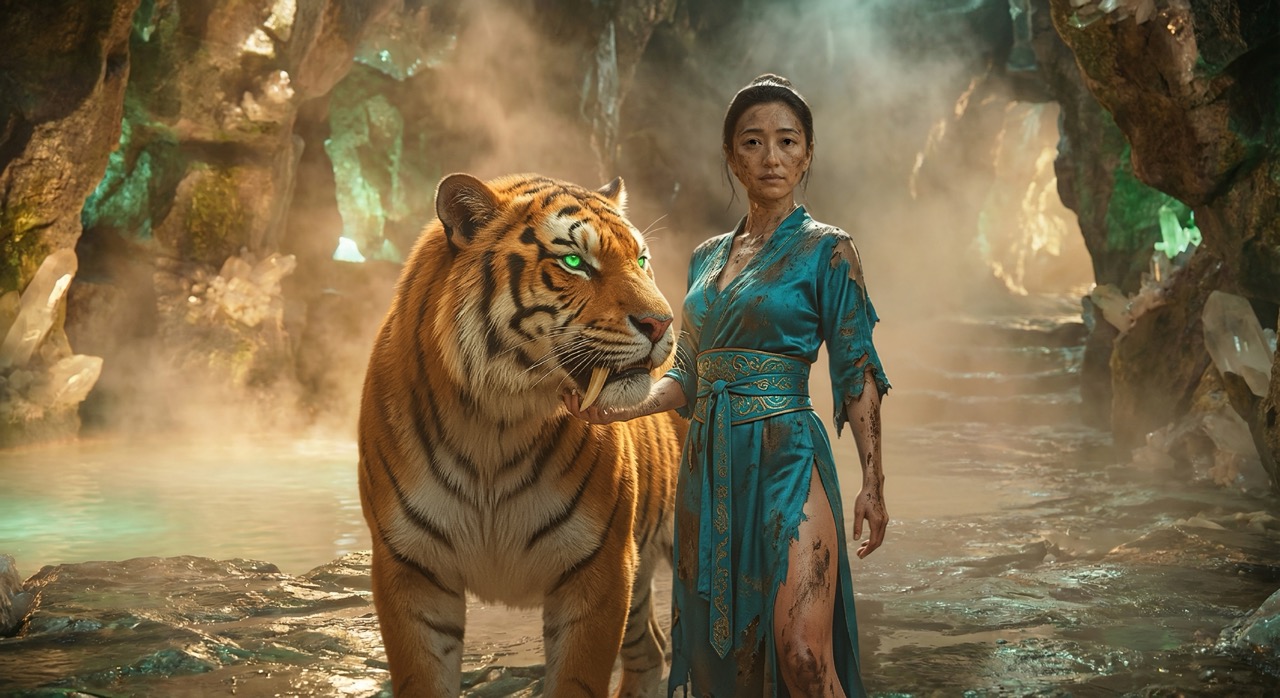
Traveling by his side are three companions: Sweet Friend, Chouchou, and Little Rainbow, an Indian princess of mysterious origin. Their adventure takes an unimaginable turn during a brutal journey that rips them from the world of men and hurls them into an unknown universe: the Fifth World.
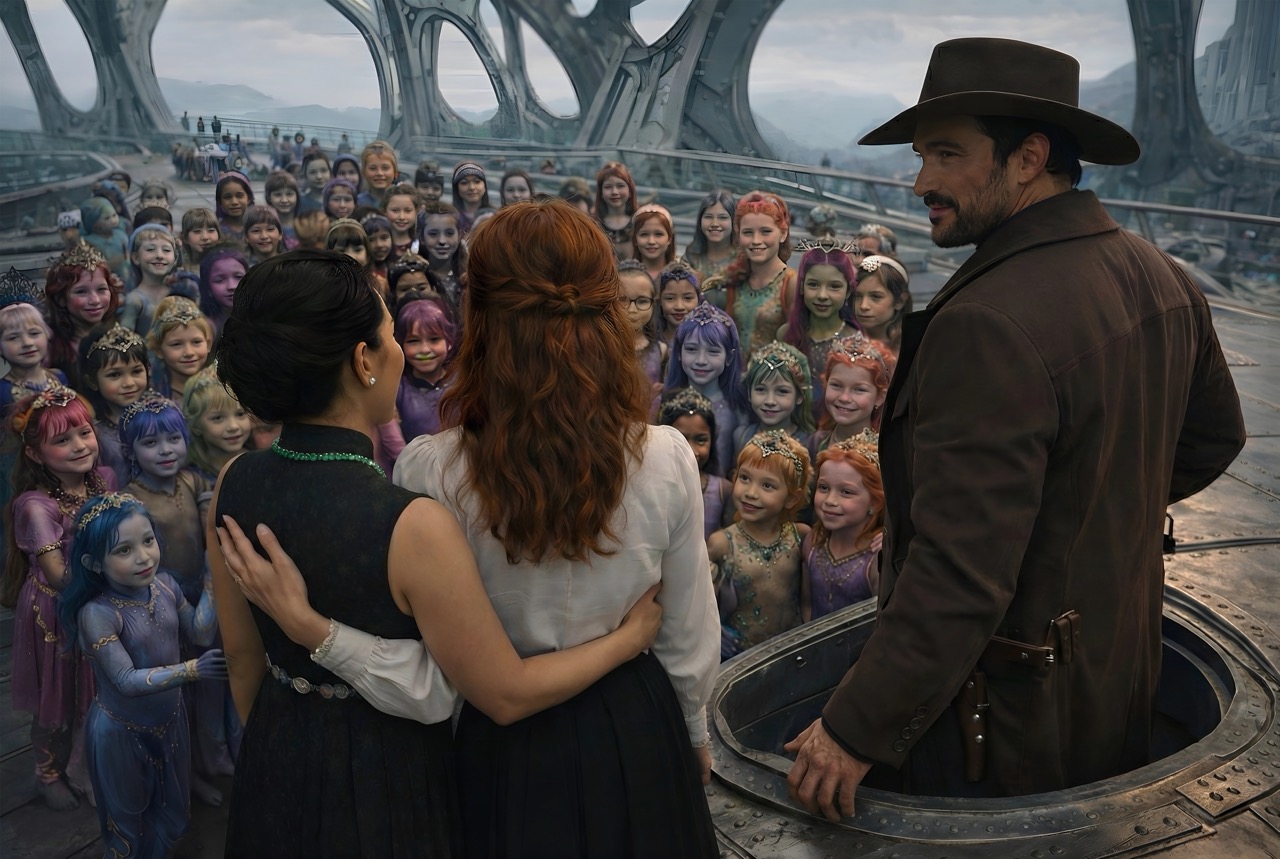
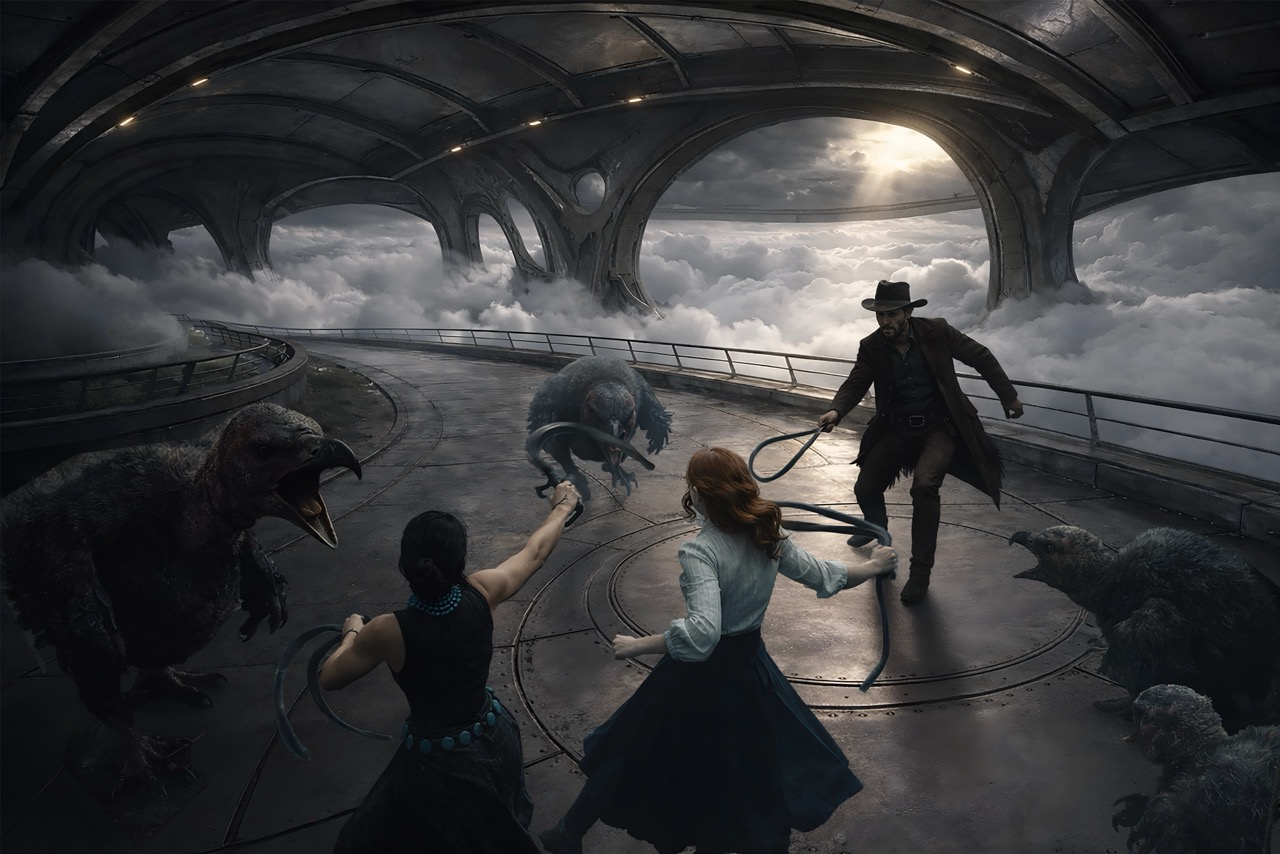
There, the landscapes defy reason. Their travels take them past gigantic towers of stone and metal.
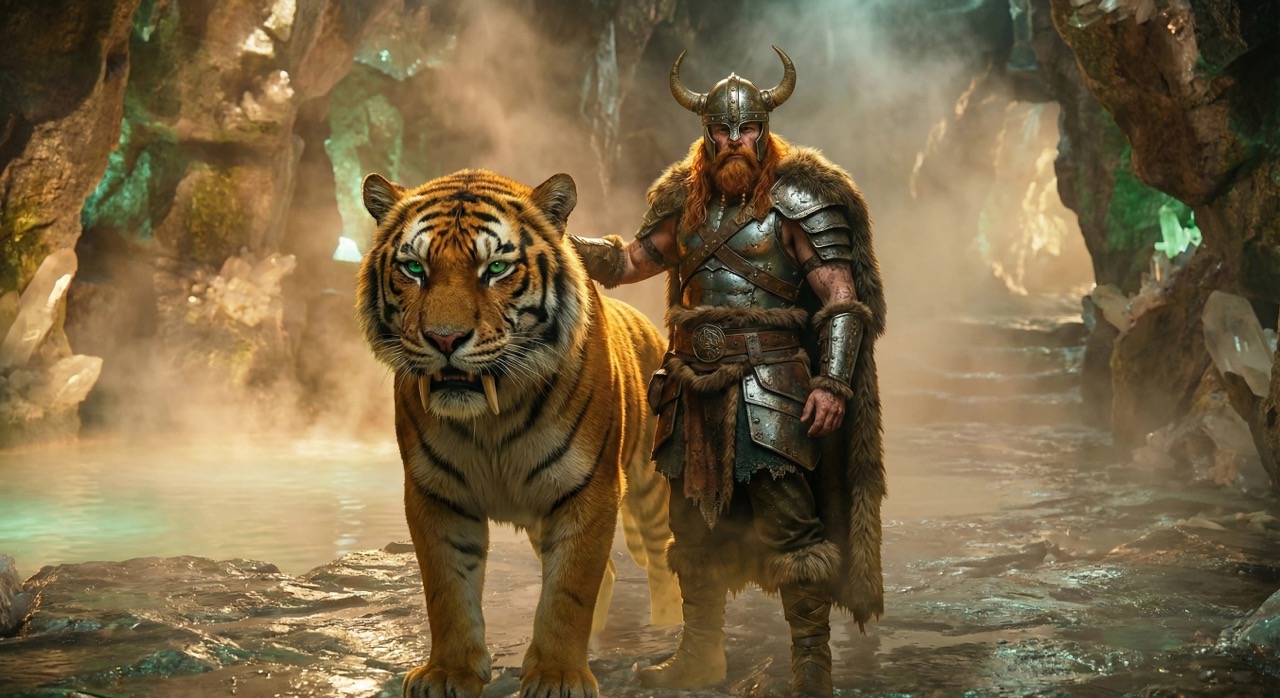
There, they encounter all manner of living creatures, even prehistoric ones. And strange beings, linked to ancient mythologies, who seem to guide the fate of the Immortals. In the heart of this often-hostile world, the heroes must survive, lose their way, find each other again… and gradually come to understand that immortality is no easy feat.
In this new universe, they encounter impressive beings: first, cosmic “Aragnes,” weavers of fate. Then, hybrid giants, half-human, half-arachnid, working for titans capable of devouring one another, but also of protecting life.
Separated from his friends and wounded, Jod then meets a young woman with blue skin and copper-colored hair, as fascinating as she is enigmatic. Everyone refers to her by an unusual word: the “Gyne”.
She will heal Jod, then guide and protect him throughout the twists and turns of his explorations.
But can he trust her completely?
Finally, will he ever find his friends again… and will he discover the secret of this Golden Hair?...
